Does your dog have selective hearing?
Have you ever called your dog to come inside, only for them to completely ignore you, but the second you open the treat bag or the fridge, they appear out of nowhere? Or perhaps you ask your dog to sit, and they stare at you as though you've suddenly started speaking another language. Yet, the moment you pick up their lead, they are right beside you, ready for their walk!
If so, you’re not alone! Many dog owners experience this so-called "selective hearing," and it’s more common than you think. While it can be amusing, it can also be frustrating when you’re trying to get your dog to follow cues consistently.
The good news is that your dog probably isn't deliberately ignoring you or being stubborn. In most cases, a lack of responsiveness is a communication and training issue rather than a sign that your dog is being disobedient.
Dogs are constantly making decisions based on their environment, their previous experiences and what they believe is likely to happen next. If your dog has learned that responding to a particular cue isn't particularly rewarding—or that they can ignore it without anything happening—they may simply decide that something else is more interesting.
The key to improving responsiveness is to make listening to you clear, worthwhile and rewarding, while gradually teaching your dog to respond even when distractions are present.
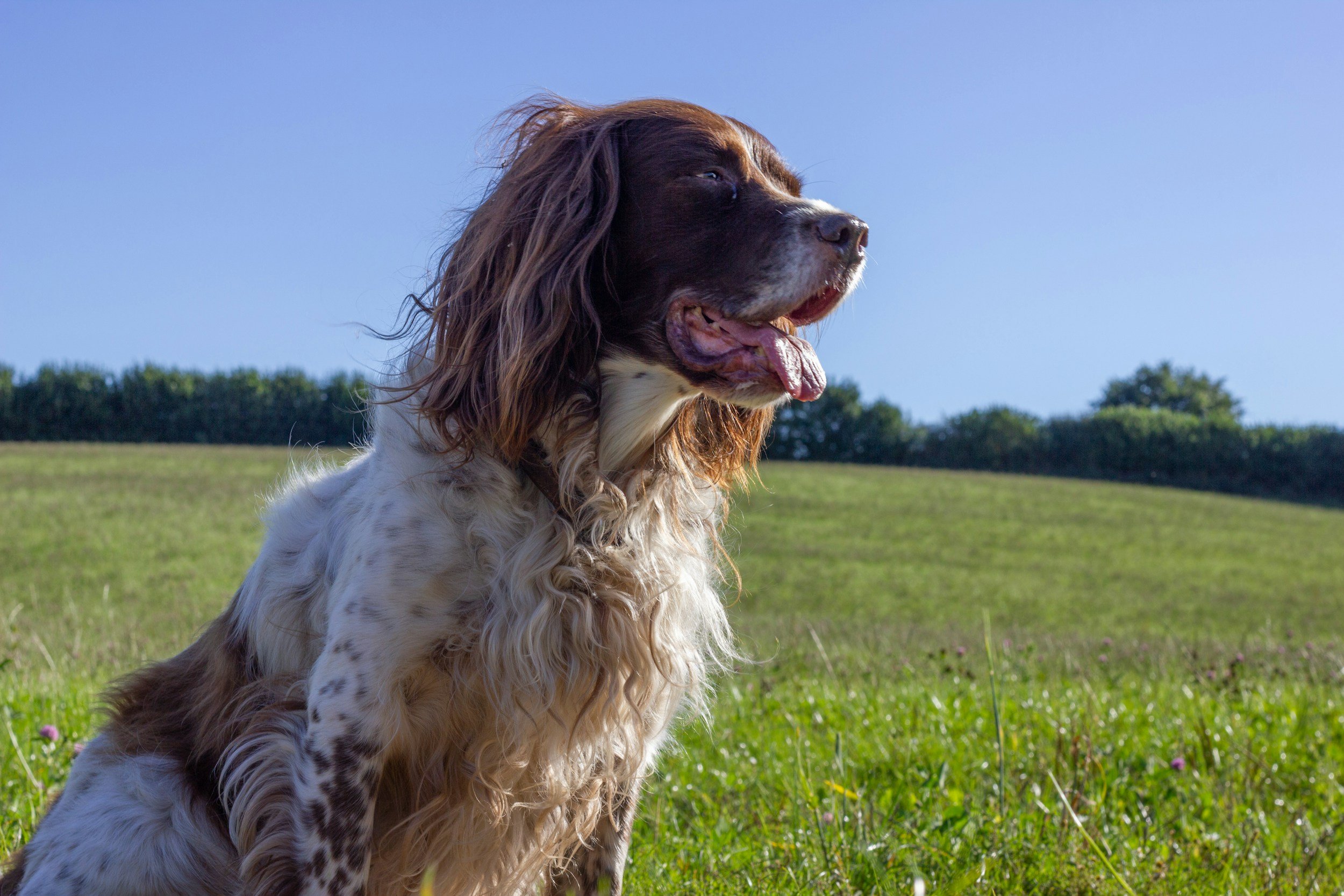
Before we label a dog as "stubborn" or "disobedient," (as labels are unhelpful at best) it's important to consider what might actually be happening. When your dog doesn't respond to a cue, there are several possible reasons:
They don't fully understand what the cue means.
They have learned that the cue doesn't always matter.
The cue has been repeated so many times that it has lost its meaning.
The environment is more rewarding or interesting than you are.
They are too excited, worried or distracted to respond.
They haven't been taught to respond around distractions.
The reward for responding isn't valuable enough in that particular situation.
They are tired, uncomfortable or physically unable to respond.
They have learned that ignoring the cue sometimes works.
This is why it's important to look at the situation from your dog's perspective.
Imagine you're in the park and your dog is sniffing an incredibly interesting patch of grass. You call their name, but they don't look up. To you, it may feel like they're ignoring you. To your dog, however, the environment is full of fascinating smells and information, and they may not yet have learned that responding to you is more valuable than continuing to sniff.
This doesn't mean your dog will never listen. It simply means that the skill needs to be developed.
Responsiveness Is a Skill You Can Teach
One of the biggest misconceptions about dog training is that dogs either "listen" or they don't. In reality, responsiveness is something that develops through learning and reinforcement. A dog who reliably responds to their name, comes when called or follows a cue in a busy environment hasn't necessarily been born with better listening skills. They have usually had lots of practice responding in different situations, and they have learned that doing so is worthwhile.
Think about your dog's responsiveness as a muscle. The more you practise it correctly, the stronger it becomes.
However, just like we wouldn't expect someone to learn a new skill perfectly after practising it once, we shouldn't expect our dogs to immediately respond reliably in every environment.
Training needs to progress gradually.
Tips to Improve Your Dog's Responsiveness
1. Make Sure Your Dog Actually Understands the Cue
Before expecting your dog to respond reliably, ask yourself whether they genuinely understand what you're asking. For example, if you say "come" while your dog is running away, they may not yet understand that "come" means they should immediately turn around and run towards you. Dogs don't automatically understand human language. They learn that specific sounds predict specific behaviours and outcomes.
If you want your dog to respond to their name, for example, their name should have a clear meaning. Ideally, it should mean:
"Pay attention to me—something good is about to happen."
You can build this association by saying your dog's name in a happy tone and immediately rewarding them when they look towards you. Start somewhere easy. Say their name when they are already close to you and not particularly distracted. The moment they look at you, reward them. Repeat this frequently. Over time, your dog's name becomes a reliable attention cue rather than simply a word they hear throughout the day.
2. Be Consistent With Your Cues
Consistency is one of the most important parts of successful dog training.
If one person says "down," another says "lie down," and someone else uses a hand signal, your dog may struggle to understand exactly what is expected. This doesn't mean you can never teach multiple cues for the same behaviour, but each cue should have a clear meaning. It's also important to consider what happens after your dog responds.
If you call your dog to you and sometimes reward them, sometimes put their lead on, sometimes end their fun and sometimes do nothing at all, the value of the cue can become unpredictable. This is particularly important with recall. If "come here" always means the end of the walk, your dog may start thinking:
"Why would I come back? I was having fun!"
Instead, practise calling your dog back, rewarding them, and then releasing them to continue enjoying their walk. This teaches your dog that coming back to you doesn't always mean the fun is over.
3. Reward the Behaviour You Want
Dogs repeat behaviours that have rewarding consequences. The reward doesn't always have to be food. Depending on your individual dog, rewards might include:
Food treats
Praise and affection
Playing with a favourite toy
Chasing a ball
Being released to sniff
Going outside
Greeting a person
Continuing their walk
Access to something they enjoy
The most important thing is that the reward is valuable to your dog in that moment.
A small piece of dry food might be very rewarding inside the house but completely uninteresting when your dog is outside watching another dog play. This is why it's useful to have a variety of rewards available. Think about what your dog finds motivating in different situations and use that to your advantage.
For example, if your dog loves sniffing, you can reward them for responding to their name by allowing them to return to sniffing. This creates a powerful lesson:
"Listening to my person doesn't stop me from having fun. Sometimes, listening actually helps me get more of what I want."
4. Don't Repeat Your Cue Over and Over
One of the most common habits I see is people repeating a cue when their dog doesn't respond. "Come. Come! "COME! Come here!"
Unfortunately, repeating the cue doesn't necessarily make your dog more likely to respond.
In fact, it can teach your dog that the first cue doesn't really matter. If your dog learns that they can wait until the fifth or sixth repetition before responding, they may begin to ignore the first few requests. Instead, try to avoid repeatedly saying the same cue.
If your dog doesn't respond, think about why.
Are they too distracted?
Is the environment too difficult?
Is the reward not valuable enough?
Have you asked for something they haven't practised?
Rather than repeating the cue, make the situation easier and try again.
Training should be about setting your dog up for success rather than repeatedly testing them.
5. Keep Training Sessions Short and Frequent
When it comes to dog training, frequency is often more important than duration.
You don't need to spend half an hour drilling commands every day. In fact, many dogs learn better from several short sessions spread throughout the day. Two to five minutes of focused training can be incredibly effective. You could practice:
Your dog's name while making a cup of tea.
A quick recall in the garden.
Checking in with you during a walk.
A few sits or downs before dinner.
Responding to a hand signal while watching television.
A quick game of "find it" around the house.
These small moments add up. Frequent, successful practice helps your dog build a strong reinforcement history without becoming bored or frustrated.
6. Start With Minimal Distractions
If your dog responds beautifully in your living room but completely ignores you at the park, this doesn't necessarily mean your training has failed. It means the park is a much more difficult environment.
Dogs don't automatically generalise their learning.
Your dog may understand that "come" means "run towards my person" in the kitchen, but they may not yet understand that it means exactly the same thing when they're chasing a squirrel.
This is why distractions need to be introduced gradually. Think of training as a ladder:
Easy → Slightly harder → Moderate → Challenging → Very challenging
For example:
Practise indoors.
Practise in the garden.
Practise in a quiet outdoor space.
Add mild distractions.
Practise around people at a distance.
Practise around dogs at a distance.
Gradually reduce the distance and increase the difficulty.
If your dog stops responding, you've probably increased the difficulty too quickly. Simply go back a step and build up again.
7. Learn to Recognise Your Dog's Distraction Threshold
Every dog has a point where the environment becomes so exciting or overwhelming that responding becomes difficult. This is sometimes referred to as your dog's threshold.
For example, your dog may be able to respond to their name when another dog is 30 metres away, but not when that dog is standing directly in front of them.
If you continue asking for responses when your dog is already overwhelmed by the distraction, you may be setting them up to fail.
Instead, work at a distance where your dog can still think and respond. Reward them for looking at the distraction and then choosing to look back at you. Over time, you can gradually decrease the distance. This teaches your dog an incredibly useful skill:
"I can notice exciting things and still pay attention to my person."
8. Reward Your Dog for Checking In
One of the easiest ways to improve responsiveness is to reward your dog for choosing to pay attention to you without being asked.
If your dog looks at you during a walk, say "yes!" or offer a reward.
If they voluntarily walk back towards you, reward them.
If they glance at you when they hear a noise, reward them.
If they choose to walk beside you for a few steps, reward them.
You are teaching your dog that checking in with you is worthwhile.
The more your dog learns to voluntarily pay attention to you, the easier it becomes to get their attention when you actually need it.
9. Use Your Dog's Environment as a Reward
Food isn't the only way to reinforce your dog. The environment itself can provide fantastic rewards.
For example:
Your dog wants to sniff a bush.
Ask for a simple behaviour, such as looking at you.
Your dog looks at you.
Reward them by saying "go sniff!" and allowing them to investigate the bush.
Your dog learns that responding to you doesn't always mean losing access to the things they enjoy. This is especially useful for dogs who aren't particularly food motivated outdoors. You can use access to sniffing, exploring, playing or greeting as part of your training.
10. Make Yourself More Interesting
Sometimes, your dog isn't responding because the environment is simply more rewarding than you are. If your dog is having a wonderful time running around and sniffing, calling them back in a dull voice and expecting them to immediately abandon their fun may not be very realistic.
Try becoming part of the fun.
Use an enthusiastic voice.
Move away from your dog rather than towards them.
Run a few steps.
Play a game.
Get down on the floor.
Use a toy.
Make coming towards you an enjoyable experience.
This is particularly important when training recall.
You want your dog to think: "Coming back to my person is brilliant!" rather than: "Coming back means the fun is over."
11. Be Careful What You Teach Your Dog
Dogs learn from consequences, including consequences we don't intend to create. Imagine you call your dog inside from the garden.
They ignore you. You call again. They still ignore you. Eventually, you walk outside, catch them and bring them inside.
Your dog has now learned that ignoring the recall cue is an option.
This doesn't mean you should chase your dog around the garden shouting their name. Instead, it highlights why management is so important while you're training. If your dog's recall isn't reliable, avoid putting them in situations where they can repeatedly practice ignoring you.
Use a long line in appropriate areas, secure fencing and controlled environments while you build the behaviour. The more often a dog practises ignoring a cue, the stronger that habit can become.
You also want a cue leading to something good - if something bad happens they are more likely to avoid the cue.
13. Consider Your Dog's Emotional State
Responsiveness isn't just about training.
A dog who is frightened, anxious, highly excited or overwhelmed may struggle to respond—even if they know exactly what you are asking.
For example, a dog who is worried by another dog may be too focused on that situation to respond normally.
Similarly, a dog who is extremely excited about chasing something may struggle to process your cue.
In these situations, increasing the volume of your voice or repeating the cue isn't necessarily going to help. Instead, consider how you can reduce the intensity of the situation.
Create distance.
Move away from the distraction.
Use a calmer environment.
Give your dog time to decompress.
Good training isn't just about teaching dogs to respond. It's also about understanding when they are capable of responding.
What If My Dog Knows the Cue But Still Doesn't Respond?
This is a very common question.
The answer is that "knowing" a cue isn't necessarily the same as being able to perform it in every situation. Your dog may know "sit" perfectly well in the kitchen but struggle to sit when they are excited at the park. Your dog may recall beautifully from five metres away but struggle when they are 50 metres away. Your dog may respond to their name when they're relaxed but not when they're highly distracted.
Instead of asking, "Does my dog know this cue?" ask:
"Can my dog perform this behaviour in this environment, with this level of distraction, at this distance and with this level of excitement?"
This way of thinking can completely change your approach to training.
If your dog struggles, it doesn't necessarily mean they are being stubborn.
It may simply mean the task is currently too difficult.
Remember: Your Dog Isn't Giving You a Hard Time—They're Having a Hard Time
It's easy to become frustrated when your dog appears to ignore you.
But changing the question from:
"Why won't my dog listen to me?"
to:
"Why is my dog struggling to respond right now?"
can help you approach training with a completely different mindset.
Perhaps the distraction is too difficult.
Perhaps the cue hasn't been practised enough.
Perhaps the reward isn't valuable enough.
Perhaps your dog is too excited.
Perhaps they are tired or overwhelmed.
Or perhaps they simply haven't yet learned that the cue applies in this particular situation.
Once you understand the reason behind the lack of responsiveness, you can adjust your training accordingly.
Selective hearing in dogs isn’t laziness or defiance—it’s a sign that they need clearer communication and more motivation. By being consistent, patient, and engaging, you can improve your dog’s responsiveness and strengthen your bond. Remember, training should be a fun and rewarding experience for both you and your furry companion, making cues something they want to engage with rather than ignore.